Broadcast across International Platforms
Dr Paul O’Donoghue’s scientific and anti-poaching work has been featured internationally across major broadcast, print, and policy media platforms including :
BBC News | BBC Breakfast | ITV News | Channel 4 News | Sky News | The Guardian | The Times
The Daily Telegraph | National Geographic | New Scientist
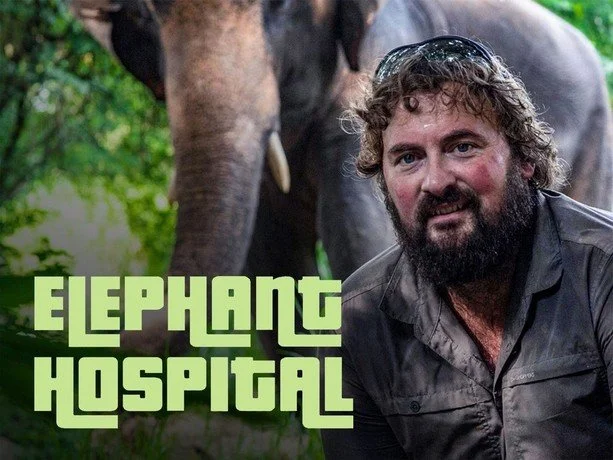
He appeared as an on-screen elephant conservation specialist in the Channel 5 documentary series The Elephant Hospital, contributing expert insight into frontline wildlife protection.
He has also appeared on the following networks :
Channel 5 — The Elephant Hospital
On-screen elephant conservation specialist
BBC Breakfast
Commentary on wildlife conservation and species protection
Sky News
Wildlife crime and conservation enforcement reporting
ITV News / Channel 4 News / The One Show / Countryfile / BBC News
Conservation and environmental policy features
-
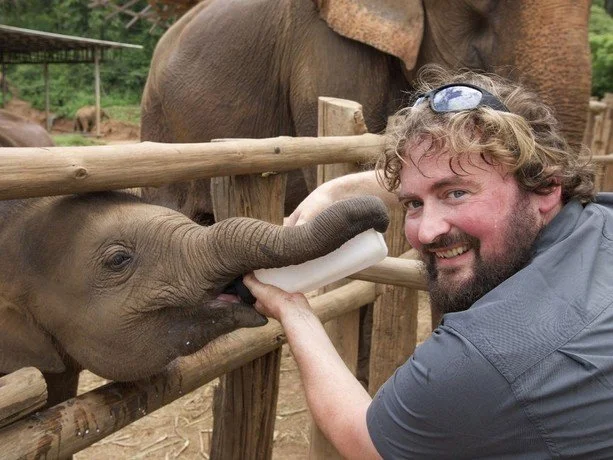
![A man feeding a young elephant with a bottle at a zoo or sanctuary, with larger elephants in the background.]()
Conservation
-
![A man with curly hair and a beard smiling next to an elephant, with a green outdoor background and the text 'Elephant Hospital' in large green letters.]()
Elephant Hospital
-
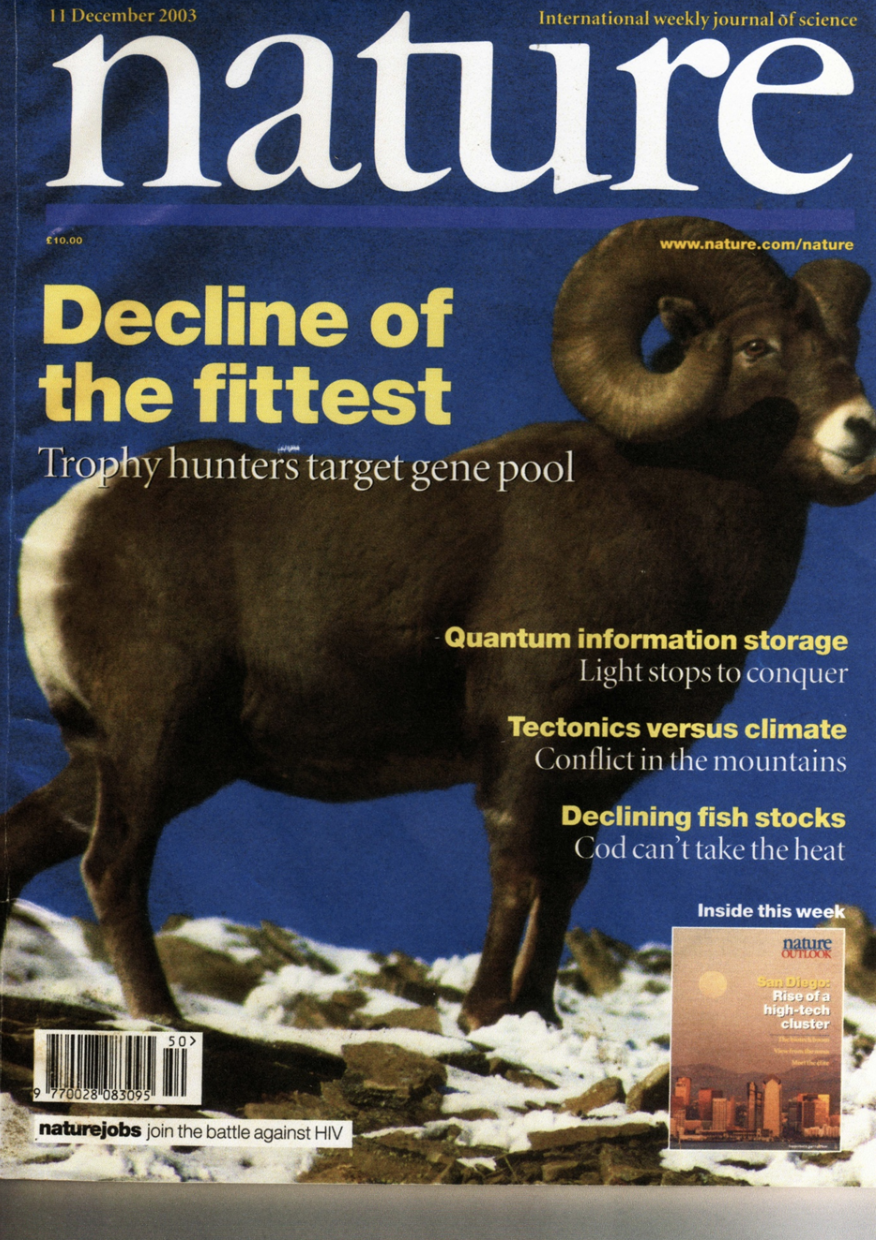
![The cover of the December 11, 2003 issue of Nature magazine featuring a large, brown ram with curved horns standing on snowy ground against a blue sky. The cover has various headlines related to science topics.]()
Nature Magazine
-
![The text 'The Washington Post' in black gothic font on a white background.]()
The Washington Post

Print & National Press
His work has been covered in prominent international print media, including The Washington Post, National Geographic, The Guardian, The Times, The Daily Telegraph, and New Scientist, reflecting the policy and scientific relevance of his conservation research.
The Washington Post
Feature coverage relating to UK lynx reintroduction feasibility
The Guardian
Conservation policy and rewilding commentary
The Times
Species reintroduction and Natural England advisory coverage
The Daily Telegraph
UK wildlife policy and reintroduction debate
National Geographic
Scottish wildcat conservation coverage
New Scientist
Wildlife forensic genetics and rhinoceros crime investigation
Nature Magazine
Landmark study demonstrating that selective trophy hunting can drive measurable evolutionary change in wild populations
Scientific Reports
Moodley, Y., et al., including O’Donoghue, P. (2017). Extinctions, genetic erosion and conservation options for the black rhinoceros (Diceros bicornis). Scientific Reports.
He contributed to major peer-reviewed research assessing genetic erosion and conservation options for fragmented black rhinoceros populations across Africa. The study informed conservation unit identification and long-term management strategies.
Journal of Applied Ecology
O’Donoghue, P. & Rutz, C. (2015). Real-time anti-poaching tags could help prevent imminent species extinctions. Journal of Applied Ecology.
Co-author of one of the first peer-reviewed frameworks proposing real-time anti-poaching alert systems integrating GPS telemetry, satellite communication, and rapid-response ranger coordination. The paper outlined how technology-driven monitoring could shift anti-poaching from reactive to proactive intervention.
IUCN Cat Classification Task Force
Contributor to:
Kitchener, A.C., et al. (2017). A revised taxonomy of the Felidae: The final report of the Cat Classification Task Force of the IUCN/SSC Cat Specialist Group. Cat News Special Issue.
Dr O’Donoghue served as a contributing expert in the global taxonomic reassessment of wild cat species and subspecies, supporting an internationally adopted classification framework used in conservation planning and species management.
Additional Named Scientific Contributions
Development and validation of DNA-based short tandem repeat (STR) marker systems for forensic identification of black rhinoceros (Forensic Science International: Genetics).
Genetic marker development for the endangered pygmy hippopotamus (Choeropsis liberiensis) (Conservation Genetics Resources).
Genetic research supporting Asiatic lion population structure and conservation strategy (Conservation Genetics).
Genetic assessment supporting conservation of mountain bongo populations (Journal of Zoo and Aquarium Research).
Public Lectures & Expert Commentary
Dr O’Donoghue has delivered invited lectures and expert commentary for academic societies, conservation organisations, and international advisory groups.
Oxford University
Chester University
Sheffield University