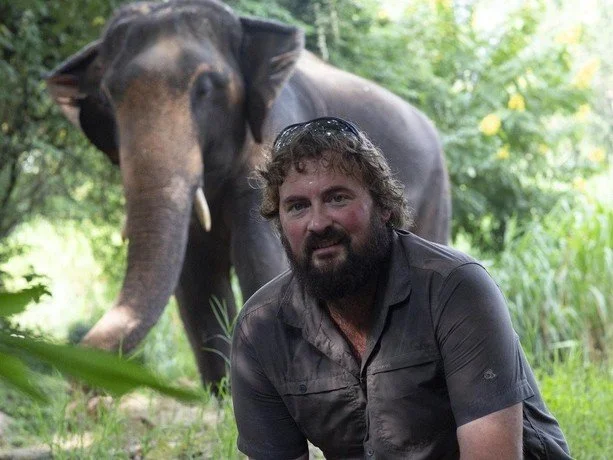
Dr Paul O’Donoghue
Conservation Geneticist & Wildlife Protections Systems Architect
Dr Paul O’Donoghue is a conservation geneticist and wildlife conservation specialist with more than 25 years of experience spanning academic research, applied conservation science, wildlife forensics, anti-poaching systems, species reintroduction, and international conservation leadership.
His work focuses on the protection of endangered species through the application of population genetics, forensic science, and field-based conservation strategies. He has combined laboratory science with hands-on wildlife management across Europe, Africa, Asia, and island ecosystems developing tools and methodologies that translate directly into conservation impact.
Dr O’Donoghue’s research and field leadership have been featured in major international media outlets including Nature, Scientific Reports, and the Journal of Applied Ecology, Washington Post and The BBC.
He is is widely published in peer-reviewed scientific journals and has contributed to major international conservation initiatives
Scientific Leader in Conservation Genetics & Wildlife Protection
Education & Early Field Exploration
Dr O’Donoghue studied Biological Sciences at the University of Oxford, where at the age of 19 he led a university expedition to the Amazon rainforest. The expedition conducted biological surveys in collaboration with governmental authorities and Indigenous communities, marking the beginning of his lifelong integration of field science with conservation practice.
He later completed a PhD in Conservation Genetics at the University of Sheffield, focusing on genetic erosion in wild populations and its implications for conservation management.
Research arising from his doctoral work was published in Nature (2003) as a co-authored cover article examining the evolutionary consequences of trophy hunting. The paper provided some of the earliest empirical evidence demonstrating how selective harvesting can drive undesirable evolutionary change in wild populations — research that has since been widely cited and continues to influence wildlife management policy discussions worldwide.
His scientific work — published in Nature, Scientific Reports, and the Journal of Applied Ecology- has informed species recovery frameworks, forensic prosecution systems, and anti-poaching technology deployment across Europe, Africa, and Southeast Asia.
Bridging laboratory genetics with operational field enforcement, Dr O’Donoghue has contributed to rhinoceros forensic identification systems, global wild cat taxonomy through the IUCN/SSC Cat Specialist Group, species reintroduction feasibility research in the United Kingdom, and advisory roles across international conservation institutions.
Research & Operational Focus
Dr O’Donoghue’s scientific work centres on population genetics, genetic diversity, and conservation decision-making.
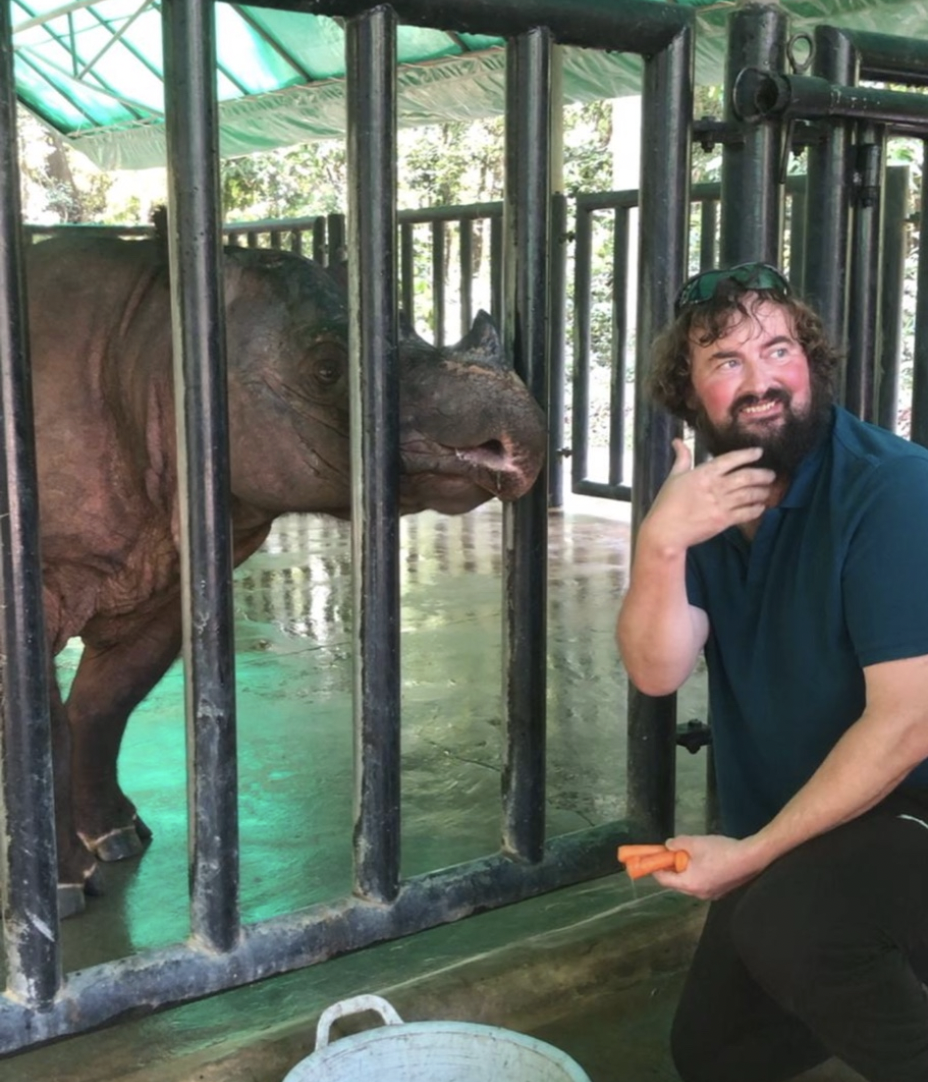
His work spans conservation genetics, wildlife forensic science, and real-time anti-poaching systems. He co-authored a landmark Nature (2003) study on the evolutionary consequences of selective trophy hunting and has contributed to peer-reviewed black rhinoceros genetic research published in Scientific Reports.
Black Rhinoceros Genetics
He co-authored major peer-reviewed research on the genetic erosion of black rhinoceros populations (Diceros bicornis), published in Scientific Reports. This work examined extinction risk, loss of genetic diversity, and conservation management options across fragmented African populations.
He also contributed to the validation of forensic genetic markers for black rhinoceroses, enabling individual identification from horn samples — a critical tool in prosecuting wildlife crime.
Asiatic Lion Genetics
Dr O’Donoghue co-authored research on the genetic structure of the Asiatic lion (Panthera leo persica), informing conservation strategies for one of the world’s most geographically restricted large carnivores.
IUCN Cat Classification Task Force
He served as a genetic contributor and advisor to the IUCN/SSC Cat Specialist Group Cat Classification Task Force, contributing to the revised global taxonomy of wild cats — a framework that underpins conservation research and species management worldwide.
Pygmy Hippopotamus & Mountain Bongo
His work has included the development of genetic marker systems for:
The endangered pygmy hippopotamus (Choeropsis liberiensis)
The critically endangered mountain bongo (Tragelaphus eurycerus isaaci)
These studies helped assess genetic diversity in captive populations to support reinforcement of wild populations.
International Advisory & Institutional Leadership
Dr O’Donoghue has advised leading international conservation institutions and species recovery programmes, contributing to taxonomy, recovery strategy, enforcement systems, and biodiversity policy across Africa, Southeast Asia, and Europe.
• IUCN/SSC Cat Specialist Group – Genetic Contributor
• Director – Linz UK Trust
• Scientific Advisor – Great Bustard Project
• International Advisor – FLIGHT Indonesia
• Advisor – Atlantic Whale and Dolphin Foundation
Contributor to global wild cat taxonomic revision framework
His advisory work directly informs species recovery strategy, enforcement methodology, and international conservation governance.

Academic & Institutional Leadership
Dr O’Donoghue has contributed to academic training and conservation capacity-building across leading institutions invited lectures at institutions including the Oxford University, University of Nottingham (Veterinary Sciences), Lancaster University, University of Chester and scientific societies focused on wildlife and conservation biology.
He spent eight years as a Senior Lecturer at the University of Chester. During his academic tenure he:
Designed and delivered a postgraduate MSc programme in Conservation Biology
Attracted international cohorts of students to applied conservation training
Established the university’s first Conservation Genetics Laboratory
Led applied research collaborations with governmental and non-governmental conservation bodies
Through this laboratory he contributed to conservation genetics and advisory projects involving:
South African National Parks
The European Endangered Species Programme (EEP)
Asiatic lion conservation initiatives
The Great Bustard Project (UK)
Governmental conservation planning efforts in Sierra Leone
Genetic research supporting endangered species management
He also delivered invited lectures at institutions including the University of Oxford, University of Nottingham (Veterinary Sciences), Lancaster University, and scientific societies focused on wildlife and conservation biology.
Global Conservation Strategy & Impact
Dr O’Donoghue’s work integrates conservation genetics, wildlife forensics, and field-based species recovery into coherent, long-term conservation strategies. His approach combines scientific rigour with operational delivery supporting governments, enforcement agencies, and conservation institutions in protecting biodiversity under increasing ecological and criminal pressure.
With experience spanning Africa, Southeast Asia, and Europe, his work bridges research, field operations, and institutional advisory at an international scale.
Selected peer-reviewed publications and institutional collaborations are available in the Publications section.