Field & Forensic Systems
Integrating molecular genetics, enforcement technology, and real-time conservation architecture.
Over the course of his career, Dr O’Donoghue has contributed to the development of real-time anti-poaching alert systems integrating GPS-enabled monitoring and satellite communication, and to the validation of DNA-based forensic marker systems used in rhinoceros crime investigation and wildlife trafficking prosecutions.
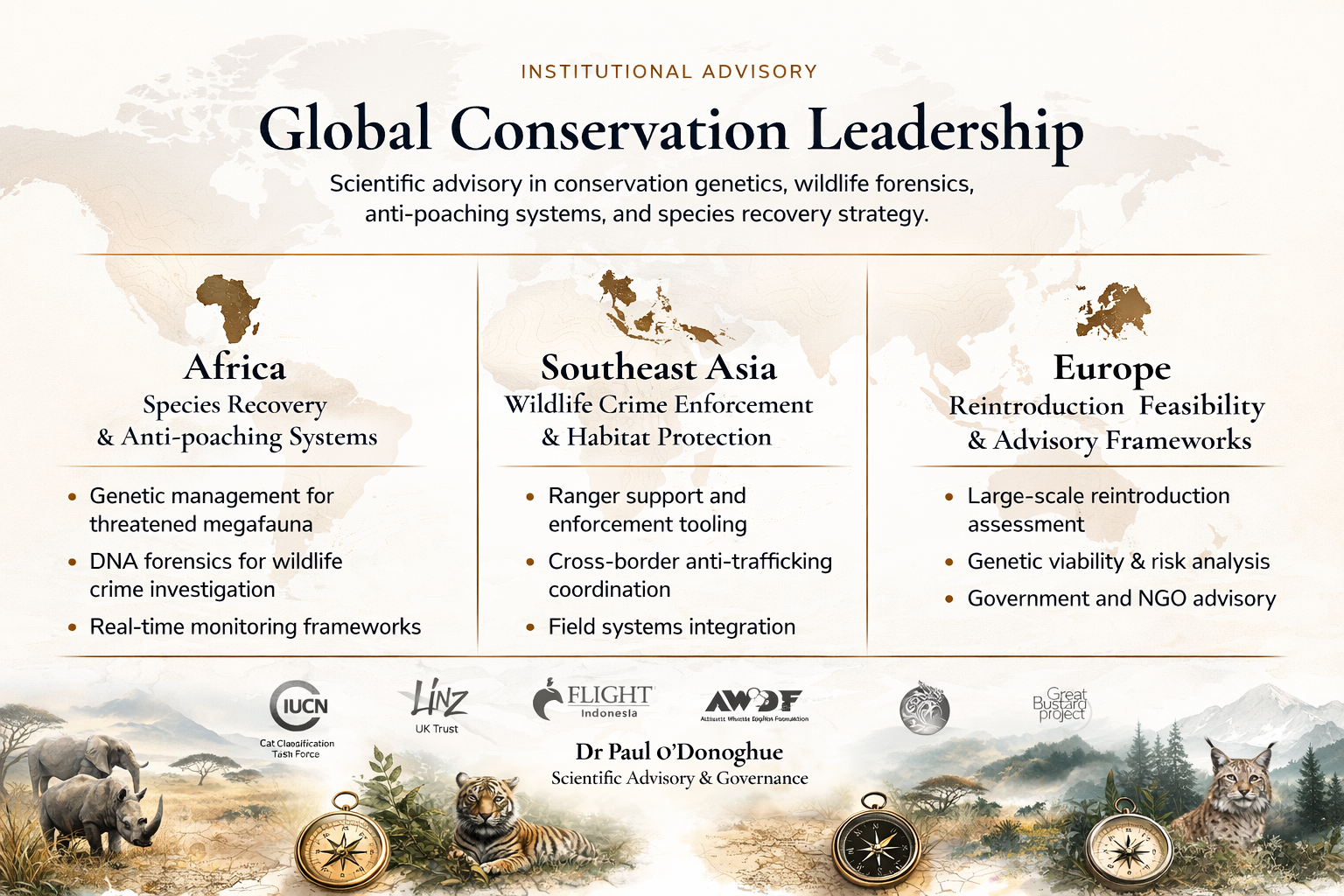
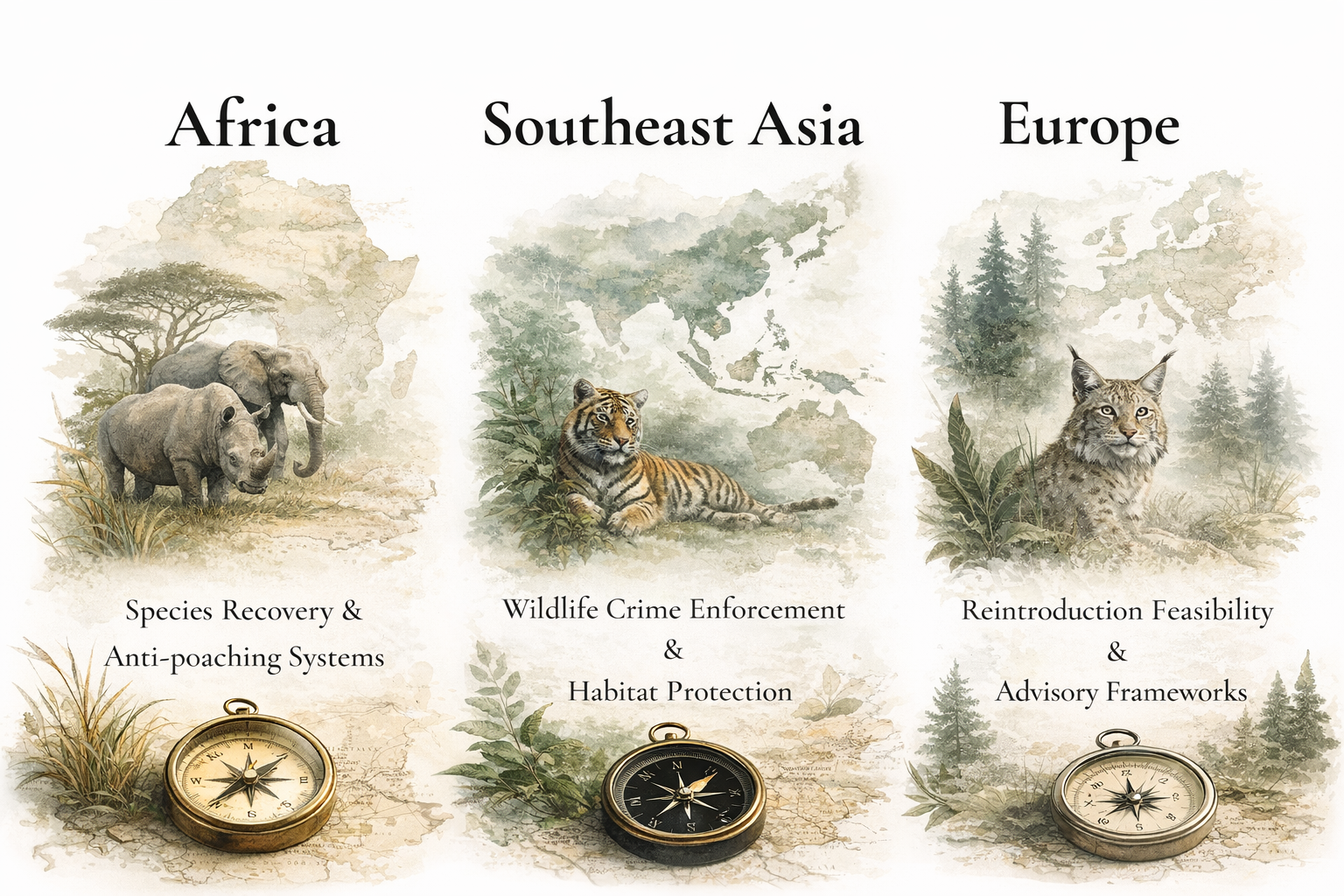
Dr O’Donoghue’s work has operated across three primary conservation landscape
• Africa – Species recovery & anti-poaching systems
• Southeast Asia – Wildlife crime enforcement & habitat protection
• Europe – Reintroduction feasibility & advisory frameworks
His work extends beyond academic research into the design and implementation of applied conservation systems. His frameworks integrate molecular genetics, satellite-enabled monitoring, forensic validation standards, and cross-agency enforcement coordination to strengthen wildlife crime prosecution and long-term species recovery.
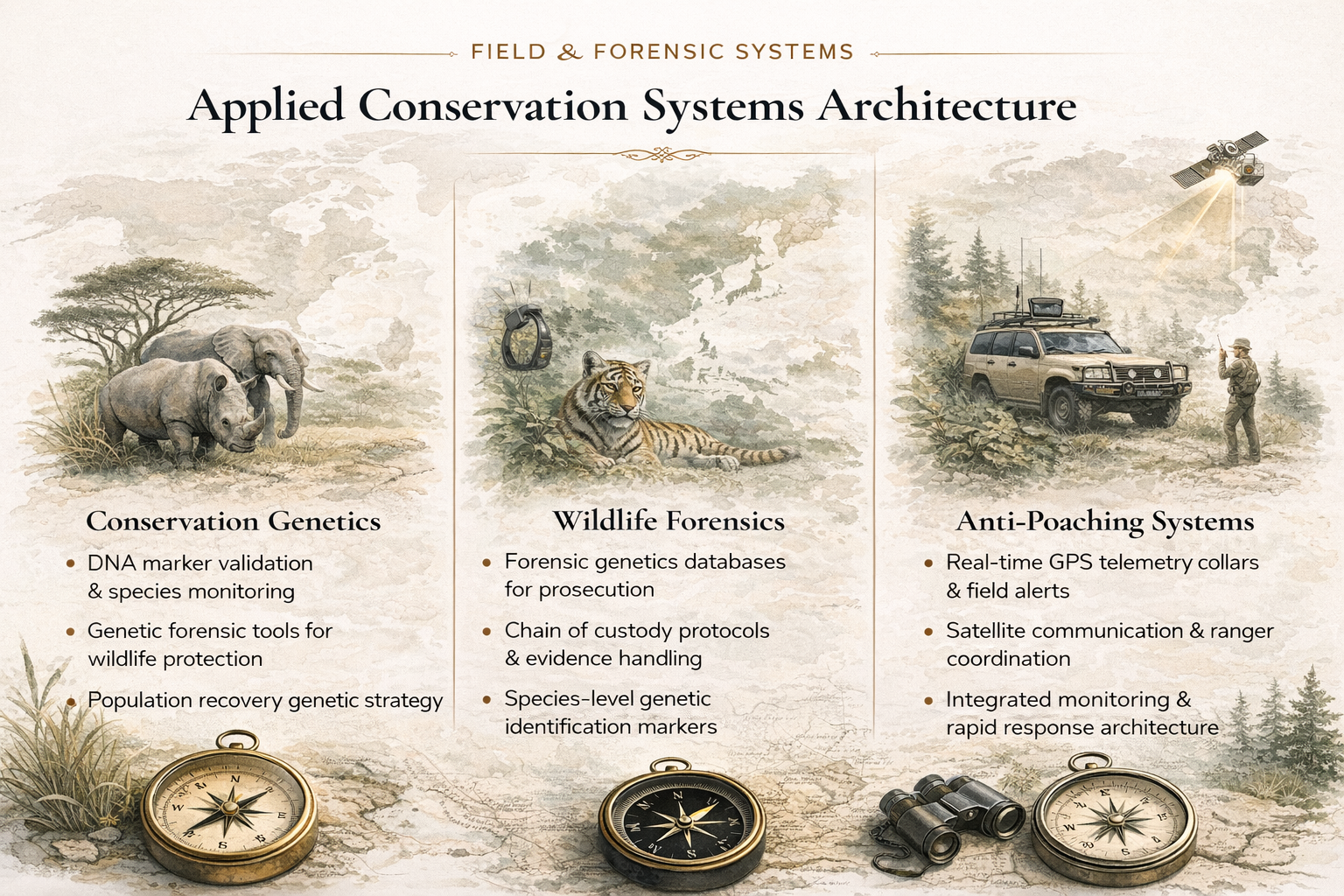
Applied Conservation Architecture
Dr O’Donoghue’s work extends beyond academic research into the design and implementation of applied conservation systems. His frameworks integrate molecular genetics, satellite-enabled monitoring, forensic validation standards, and cross-agency enforcement coordination to strengthen wildlife crime prosecution and long-term species recovery.
He has designed and deployed integrated conservation systems that combine genetics, forensic science, field monitoring technologies, and institutional governance to protect endangered species at scale.
His work has included:
• Development and validation of DNA marker systems for black rhinoceros crime investigation
• Co-authorship of one of the first peer-reviewed real-time anti-poaching alert system frameworks (Journal of Applied Ecology)
• Genetic erosion research published in Nature (2003) informing international wildlife management policy
• Advisory contribution to the IUCN Cat Classification Task Force
• Establishment of a Conservation Genetics Laboratory supporting applied conservation programmes
• Field system deployment across Africa, Southeast Asia, and Europe
Scientific Foundation
Nature (2003) — evolutionary consequences of trophy hunting
Scientific Reports — black rhinoceros genetic erosion
Journal of Applied Ecology — real-time anti-poaching systems
Operational Deployment
DNA forensic systems used in rhinoceros crime investigation
GPS-enabled wildlife monitoring and satellite alert frameworks
Field collaboration across Europe, Africa, Southeast Asia
Institutional Governance
IUCN/SSC Cat Specialist Group – Cat Classification Task Force
Director – Linz UK Trust
International Advisor – FLIGHT Indonesia
Scientific Advisor – Great Bustard Project
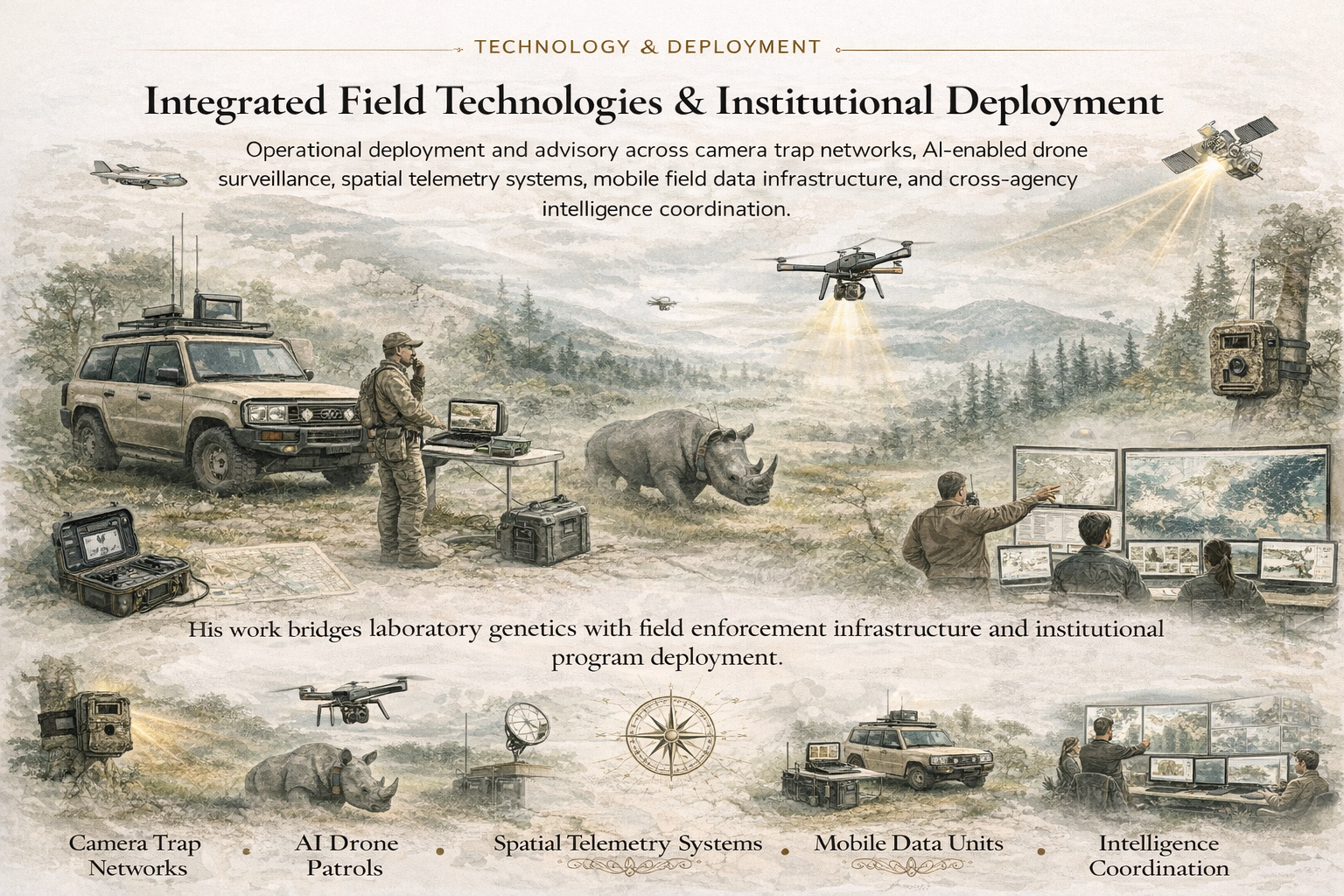
Intergrated Field Technologies
Dr Paul O’Donoghue integrates camera trap networks, GPS-enabled telemetry, satellite communication systems, and mobile field data architecture into operational conservation frameworks that support enforcement, species monitoring, and cross-agency coordination.
This work has included
• GPS-enabled wildlife telemetry
• Camera trap and spatial monitoring networks
• Satellite-linked rapid-response systems
• Mobile ranger data infrastructure
• Cross-agency enforcement coordination
Work Included :
Field Monitoring & Telemetry Systems
GPS collaring and genetic sampling of protected species (e.g., Scottish wildcat licence)
Wildlife capture and monitoring operations (rhinoceros, elephants, brown bears, bighorn sheep)
Cetacean monitoring in migratory corridors (Tenerife field research)
Spatial telemetry integration for species tracking and enforcement response
Monitoring Infrastructure & Intelligence Coordination
Camera trap deployment architecture
Satellite-enabled alert systems
Mobile field data systems for ranger reporting
Rapid-response frameworks linking monitoring to enforcement action
Institutional Deployment
Integration of forensic genetics into wildlife crime prosecution
Cross-border collaboration with protected area authorities
Advisory coordination across NGOs, governments, and conservation bodies
Deployment across Africa, Europe, and Southeast Asia
Wildlife Forensic Genetics
Dr O’Donoghue has contributed to the development and validation of DNA-based forensic marker systems used in rhinoceros crime investigations and wildlife trafficking prosecutions. His work supports evidentiary standards required for court-admissible genetic identification and transnational enforcement collaboration.
Field Implementation & Advisory
Advisory roles supporting species protection programs across Africa and Southeast Asia, integrating genetic data, enforcement systems, and population recovery strategy.
Real-Time Anti-Poaching Systems
Co-author of the first peer-reviewed real-time anti-poaching alert framework (Journal of Applied Ecology), integrating GPS-enabled wildlife monitoring, satellite communication systems, field ranger coordination, and rapid-response protocols.